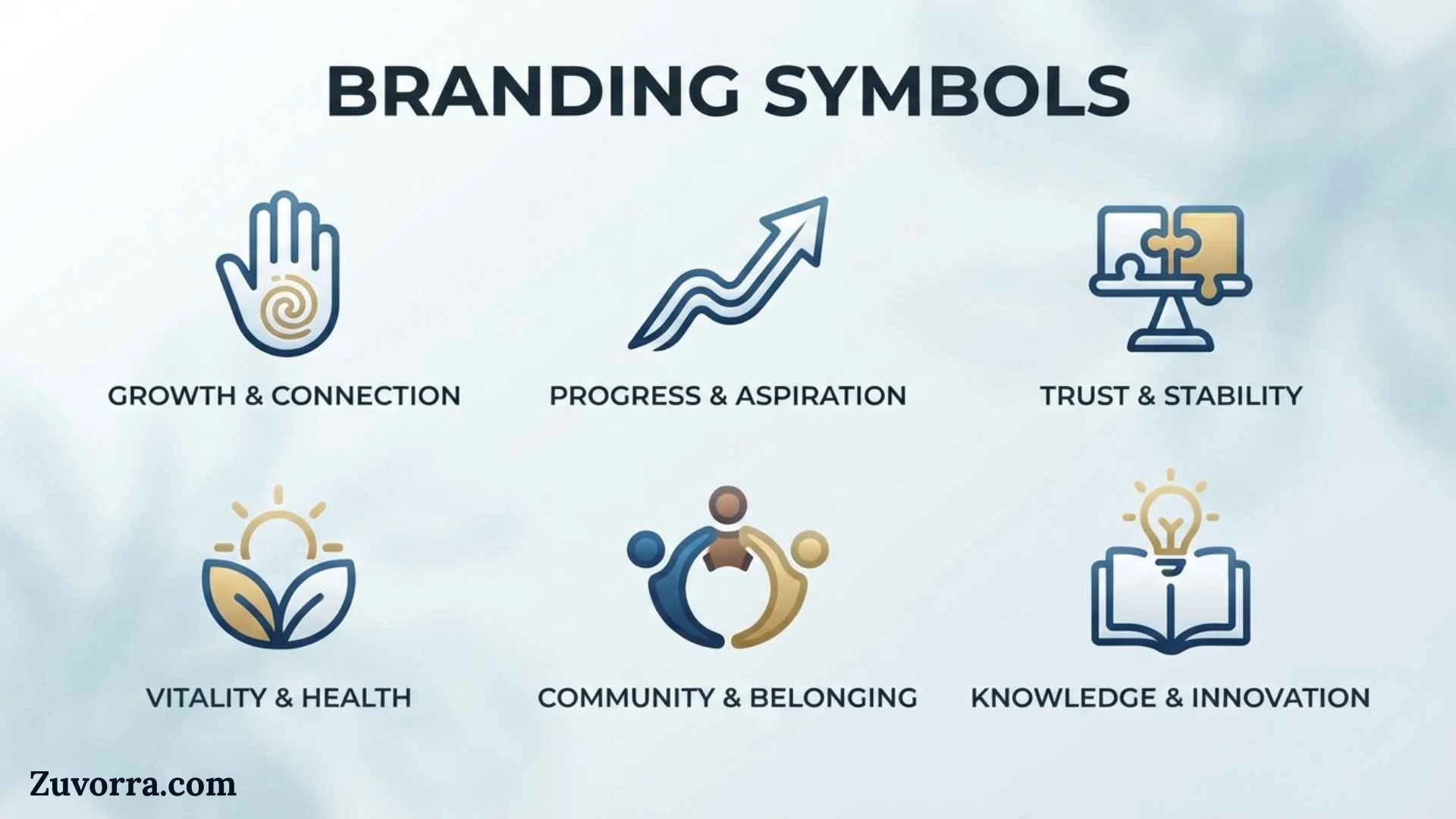
Branding symbols are visual, verbal, or sensory signs that help people recognize and distinguish a company, product, service, or organization. They include logos, icons, monograms, colors, shapes, mascots, wordmarks, and trademark notices such as ™ and ®.
You encounter these symbols on product packaging, storefronts, websites, mobile apps, advertisements, uniforms, vehicles, and social media profiles. Although a branding symbol may look simple, it can carry layers of meaning related to identity, quality, values, reputation, culture, and customer experience.
Quick Meaning
Branding symbols are recognizable signs used to represent and distinguish a brand. A symbol may identify the brand directly, communicate an idea such as trust or speed, or help customers remember a product. Common examples include logos, wordmarks, emblems, mascots, color systems, and trademark symbols.
Branding Symbols Overview Table
| Field | Explanation |
| Symbol name | Branding symbol, brand mark, logo, emblem, or identity mark |
| Primary meaning | Recognition, distinction, identity, and association |
| Category | Commercial communication and visual identity |
| Historical roots | Ownership marks, seals, heraldry, maker’s marks, and trade signs |
| Main elements | Words, letters, images, colors, shapes, patterns, sounds, and packaging |
| Common usage | Products, advertising, websites, apps, signs, uniforms, and documents |
| Modern meaning | A condensed expression of a brand’s identity and reputation |
| Legal connection | Some branding symbols may qualify for trademark protection |
| Unicode symbols | ™ U+2122, ® U+00AE, ℠ U+2120, © U+00A9 |
| Related concepts | Logo, trademark, brand identity, trade dress, icon, wordmark, monogram |
| Main purpose | To help audiences recognize and distinguish one source from another |
What Do Branding Symbols Mean?
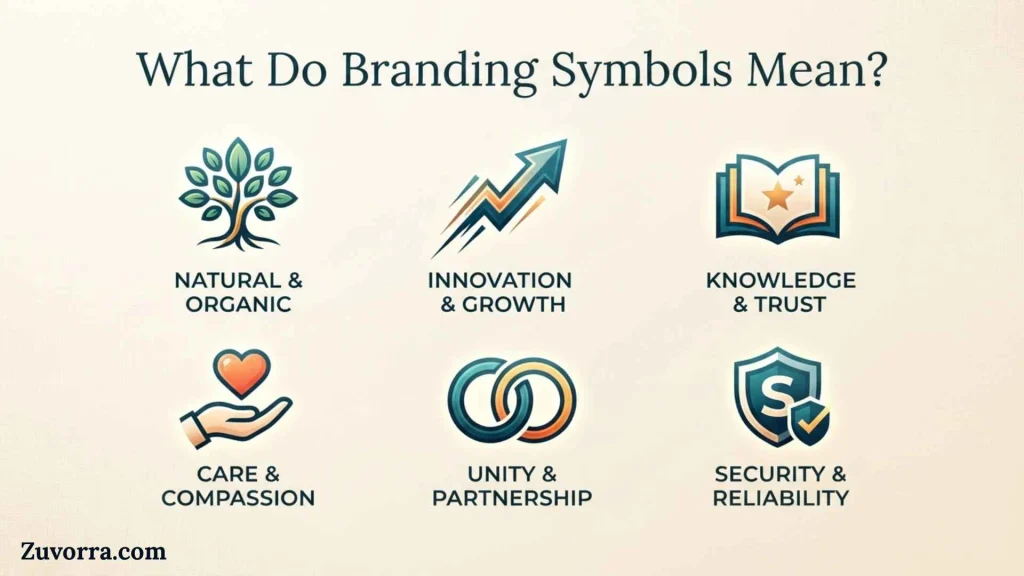
Branding symbols primarily mean identity and distinction. They tell an audience, “This product, message, or experience comes from this particular source.”
Their meaning, however, extends beyond identification. A familiar mark can trigger memories of previous purchases, advertising, customer service, product quality, social status, or personal values. This is why two people may respond differently to the same logo. One may associate it with reliability, while another remembers a poor experience.
Branding symbols usually perform several connected functions:
- Identification: They show who made or provides something.
- Differentiation: They separate one business from its competitors.
- Recognition: They help people notice a brand quickly.
- Memory: They create a visual or verbal shortcut that is easier to recall than a detailed company description.
- Meaning: They suggest qualities such as strength, elegance, safety, friendliness, or innovation.
- Consistency: They connect packaging, advertising, digital products, and physical spaces.
- Trust signaling: Familiarity may reassure customers when it is supported by positive experience.
A symbol does not create trust automatically. It becomes meaningful through repeated use, consistent presentation, product performance, public behavior, and customer interaction.
History and Origin of Branding Symbols
Branding symbols developed from much older systems of identification. Long before modern corporations existed, people used marks to show ownership, origin, authority, and craftsmanship.
Ancient ownership and maker’s marks
Potters, stonecutters, metalworkers, and merchants placed identifying marks on their work in several ancient societies. These marks could indicate the workshop, maker, owner, production center, or official inspector.
Such signs were not brands in the modern marketing sense. However, they performed a similar practical function by linking an object to a source.
Seals and official emblems
Seals became important symbols of authenticity and authority. Rulers, religious institutions, guilds, governments, and merchants used stamped impressions to verify documents and goods.
A seal could communicate legitimacy without requiring the viewer to read a long statement. Modern certification marks, institutional emblems, and corporate seals continue this principle.
Heraldry and family identity
Medieval heraldry used shields, colors, animals, plants, weapons, and geometric forms to distinguish individuals, families, territories, and military groups. Heraldic designs followed structured rules and were intended to remain recognizable from a distance.
Modern emblems and shield-shaped company logos often borrow heraldic ideas. Banks, universities, automobile companies, sports clubs, and luxury brands commonly use crests to suggest tradition, authority, endurance, or prestige.
Trade signs and shop symbols
Before widespread literacy, shops often used pictures to identify their trade. A boot could represent a shoemaker, while a key might identify a locksmith. These signs helped customers find businesses without reading written names.
The principle remains visible in modern icons. A fork and knife may suggest a restaurant, a shopping bag may indicate retail, and a speech bubble may represent messaging.
Industrial production and trademarks
Industrialization expanded trade beyond local communities. Manufacturers needed consistent signs that customers could recognize across larger markets. Printed labels, advertisements, standardized packaging, and registered trademarks became increasingly important.
The World Intellectual Property Organization defines a trademark as a sign capable of distinguishing the goods or services of one enterprise from those of others. Depending on the legal system, trademarks can include words, letters, numbers, drawings, symbols, product shapes, packaging, colors, sounds, and other distinctive features.
Corporate identity systems
During the twentieth century, many organizations moved beyond isolated logos and created coordinated identity systems. These systems standardized typefaces, colors, signs, printed materials, vehicles, buildings, and uniforms.
London Transport offers an influential example. Its roundel, lettering, maps, signs, and vehicle designs worked together as a unified public identity. Edward Johnston began redesigning the Underground symbol and lettering in 1916, and the roundel was trademarked in 1917.
Digital and responsive symbols
Today, a branding symbol must work on everything from a building facade to a smartwatch screen. Many brands use simplified icons, responsive logo systems, animated marks, app icons, profile images, and motion graphics.
The symbol is no longer a single fixed image. It may be a flexible family of related forms designed for different platforms.
Symbolism and Interpretation
A branding symbol communicates through shape, color, typography, imagery, and context. Each element can influence interpretation, but meanings are rarely universal.
Traditional meanings
Traditional branding symbols often rely on familiar images:
- Lions suggest courage, royalty, protection, or power.
- Eagles may suggest vision, freedom, authority, or national identity.
- Crowns commonly imply leadership, prestige, superiority, or luxury.
- Shields represent defense, security, heritage, or reliability.
- Trees can symbolize growth, stability, life, and connection.
- Stars may represent excellence, aspiration, guidance, or achievement.
- Wings often suggest speed, mobility, freedom, or elevation.
- Keys can represent access, solutions, ownership, or trust.
These associations depend on cultural context and design style. A playful cartoon lion communicates something different from a formal heraldic lion.
Modern meanings
Modern branding tends to favor simple geometry and abstract forms. Circles may suggest unity or continuity. Arrows can imply movement, progress, delivery, or direction. Interlocking shapes may communicate partnership, systems, or connection.
Abstract symbols give companies greater freedom to build their own meanings. At first, the shape may mean little to the public. Repeated exposure and experience gradually connect it to the brand.
Positive symbolism
Brand symbols often aim to communicate:
- Trust
- Progress
- Quality
- Community
- Creativity
- Strength
- Safety
- Simplicity
- Sustainability
- Expertise
These messages are promises rather than proven facts. A green leaf may imply environmental care, but responsible practices must support that implication.
Negative interpretations
Symbols can also create unwanted associations. Sharp forms may feel aggressive. Dense black designs may appear formal or intimidating. A historic motif may carry political, religious, or colonial meanings that the designer overlooked.
A symbol can also become negative because of a company’s behavior. Public scandals, unsafe products, poor labor practices, or misleading advertising may change how people interpret a once-positive mark.
Psychological interpretation
People generally process simple, distinct images faster than complex explanations. Repetition strengthens familiarity, while consistency helps viewers connect different encounters with the same organization.
However, familiarity should not be confused with approval. A person can recognize a symbol instantly and still distrust the brand behind it.
Types of Branding Symbols
Logo symbol or brand mark
A brand mark is a graphic image that can identify a company without spelling out its full name. It may be pictorial, geometric, or abstract.
This form works well when the symbol has gained enough recognition to stand alone.
Wordmark
A wordmark presents the brand name in a distinctive typographic style. Its identity comes from customized letters, spacing, proportions, or type selection.
Wordmarks are especially useful when name recognition is more important than a separate picture.
Lettermark and monogram
A lettermark uses initials or abbreviated letters. A monogram combines two or more letters into a unified design.
These symbols help simplify long names, but they must be distinctive enough to avoid confusion with other organizations using similar initials.
Combination mark
A combination mark joins a name with a graphic symbol. The two elements may appear together or be separated after recognition grows.
This is one of the most flexible identity formats because it provides both verbal and visual identification.
Emblem
An emblem places words and imagery inside a badge, seal, crest, or contained shape. Emblems often convey heritage, authority, craftsmanship, community, or institutional stability.
They are common among schools, government bodies, sports teams, food companies, and automobile brands.
Mascot
A mascot gives the brand a character, personality, and recognizable face. It may be a person, animal, object, or imaginary creature.
Mascots can make a brand feel friendly and memorable, especially in food, sports, education, entertainment, and family-focused markets.
Color symbol
A color or color combination may become strongly associated with a brand. Color can increase recognition, organize product lines, and shape emotional tone.
Yet color meanings vary. White may suggest purity in one context, mourning in another, or simply minimalism in modern design.
Shape and packaging
Distinctive product shapes, containers, labels, or packaging structures can act as brand identifiers. In trademark law, these features may sometimes be discussed as product configuration or trade dress, depending on the jurisdiction.
Protection is not automatic. A feature generally needs to identify source rather than serve only a functional purpose.
Pattern and texture
Repeated graphics, stripes, prints, grids, and surface treatments can create a recognizable visual signature. Patterns are especially useful in clothing, luxury goods, packaging, interiors, and digital backgrounds.
Sound and motion
A short melody, startup sound, spoken phrase, animation, or movement sequence may function as a brand sign. These sensory identifiers have become more important in streaming, apps, gaming, devices, and video advertising.
WIPO recognizes that trademarks are not limited to ordinary words or pictures. Depending on national law, distinctive signs may include three-dimensional forms, colors, sounds, and other nontraditional features.
Cultural Significance
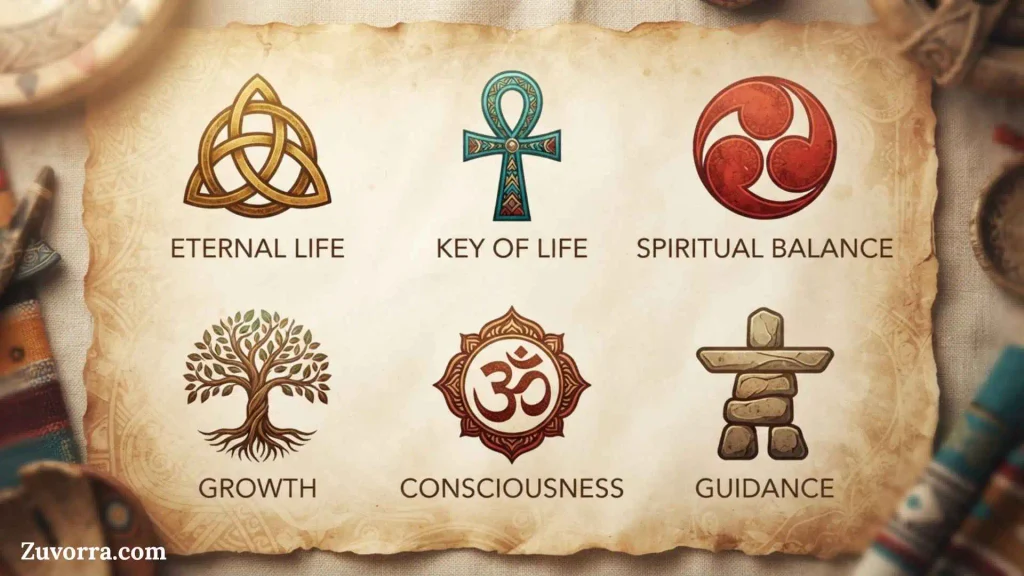
Branding symbols operate inside culture, so their meanings can change across regions, languages, and communities.
Color differences
Red can suggest energy, celebration, urgency, danger, luck, or political identity. Green may represent nature, permission, health, religion, money, or national identity. Purple can evoke royalty, spirituality, creativity, or mourning.
Designers should therefore test color choices in the markets where the symbol will appear.
Animals and plants
Animal symbolism also varies. Owls commonly represent wisdom in many Western settings, yet they may carry associations with death, secrecy, or misfortune elsewhere. Dragons can represent danger in some European traditions and power, prosperity, or imperial authority in several East Asian traditions.
A plant associated with remembrance in one region may be connected with funerals, medicine, religion, or national heritage in another.
Language and writing systems
Letter-based marks may be difficult to pronounce or recognize when moved into another linguistic market. A stylized character may accidentally resemble another letter, number, word, or offensive sign.
International brands often develop local scripts or multilingual versions while protecting the basic visual identity.
Historical and political context
Symbols borrowed from flags, military insignia, Indigenous art, religious objects, or political movements require careful research. Their use can raise questions about respect, ownership, appropriation, and misrepresentation.
A symbol should not be treated as culturally neutral merely because it looks decorative.
Religious or Spiritual Meaning
Some branding symbols use halos, crosses, crescents, lotus flowers, mandalas, sacred geometry, angels, temples, or mythological figures. These motifs may communicate purity, protection, enlightenment, healing, tradition, or transcendence.
Their use can also be controversial. Sacred symbols have established meanings within living faiths and communities. Turning them into decoration may appear disrespectful, especially when the symbol is altered, placed on unsuitable products, or removed from its religious context.
Businesses using spiritually significant imagery should research:
- The symbol’s actual tradition and history
- Whether its use is sacred, ceremonial, or restricted
- Regional and denominational differences
- How believers may view commercial use
- Whether consultation with cultural or religious representatives is appropriate
Religious imagery should never be selected solely because it appears mysterious or alternative.
Scientific, Technical, and Legal Meaning
Branding symbols have no single scientific meaning, but they connect closely with communication theory, intellectual property, digital design, and accessibility.
Semiotics
Semiotics studies how signs create and communicate meaning. A branding symbol can be understood through three broad relationships:
- Icon: Resembles what it represents, such as a camera image for photography.
- Index: Points to something through association, such as smoke indicating fire.
- Symbol: Gains meaning through learned convention, such as a letter, flag, or abstract logo.
Many logos combine all three.
Trademark symbols
The symbols ™, ℠, and ® communicate different legal claims in the United States:
| Symbol | Meaning | Typical use |
| ™ | Trademark claim | Goods or a general unregistered mark |
| ℠ or SM | Service mark claim | Services |
| ® | Federally registered trademark | A mark registered with the USPTO |
The USPTO explains that ™ and SM may be used even when a mark is not federally registered. The ® symbol should be used only after federal registration and only in connection with the goods or services covered by that registration.
Trademark rules differ by country, so businesses operating internationally should obtain advice for each relevant jurisdiction.
Copyright symbol
The © sign relates to copyright, not trademark registration. Copyright may protect original artwork contained in a logo, while trademark law may protect the logo as a source identifier. These rights can overlap, but they serve different purposes.
Digital accessibility
A logo should not be the only method used to communicate essential information. Websites and apps need text alternatives, readable contrast, clear labels, and interfaces that remain understandable when images do not load.
A recognizable brand mark does not replace accessible navigation.
Where Branding Symbols Are Used
Brand symbols appear across nearly every customer touchpoint:
- Product labels and packaging
- Storefronts and office signs
- Websites and online stores
- Mobile apps and favicons
- Social media profile images
- Advertising and sponsorships
- Business cards and invoices
- Employee uniforms
- Vehicles and delivery boxes
- Trade-show displays
- Instruction manuals
- Buildings and interiors
- Branded merchandise
- Email signatures
- Video introductions and animations
Consistency matters, but exact uniformity is not always practical. A detailed emblem may work on a building while a simplified version is needed for a small app icon.
Common Variations
Full and simplified versions
A full logo may include the symbol, brand name, slogan, and date of establishment. A simplified version may contain only the icon or initials.
Horizontal and stacked layouts
Horizontal marks fit website headers and signs. Stacked designs work better in square spaces, packaging panels, and social profiles.
Monochrome versions
A one-color version helps when full color is unavailable, expensive, distracting, or unsuitable for engraving and embossing.
Responsive logo systems
Responsive identities use different levels of detail at different sizes. The brand remains recognizable while unnecessary elements disappear on smaller screens.
Animated adaptations
Motion can reveal, transform, rotate, or assemble the mark. Animation should reinforce the identity rather than turn the logo into an unrelated visual effect.
Regional adaptations
Global organizations sometimes adjust language, typography, product names, or supporting imagery for local markets while keeping the central symbol recognizable.
Common Misconceptions
A logo and a brand are the same thing
A logo is one element of a brand. The broader brand includes reputation, positioning, behavior, products, service, language, values, and customer experience.
Every company symbol is automatically registered
Using a symbol does not mean it has been registered. Registration requires an application and approval under the rules of the relevant trademark office.
Adding ™ guarantees legal protection
The ™ symbol announces a trademark claim, but it does not prove ownership, registration, distinctiveness, or freedom from conflict with existing rights.
The ® symbol means copyright
The ® symbol indicates trademark registration in jurisdictions that use it. Copyright is represented by ©.
Every color has a fixed emotional meaning
Color associations depend on culture, context, shade, surrounding elements, and personal experience. A color chart cannot predict every audience response.
Simple logos are easy to create
Reducing an identity to a few meaningful forms requires careful decisions about recognition, originality, scale, culture, and use. Simplicity is often the result of disciplined design rather than minimal effort.
A redesign always fixes reputation problems
A new symbol may improve clarity or relevance, but it cannot repair weak products, poor service, or unethical behavior by itself.
A Practical Decision Guide for Choosing a Brand Symbol
Use this simple path before selecting a format:
Is the brand name short and distinctive?
↓
Yes: Consider a wordmark.
Is the name long or commonly abbreviated?
↓
Yes: Consider a lettermark or monogram.
Does the brand need a friendly character?
↓
Yes: Explore a mascot.
Does tradition or authority matter most?
↓
Yes: An emblem or seal may fit.
Will the symbol appear mainly in apps and small digital spaces?
↓
Yes: Prioritize a simple, scalable icon.
Is the company entering several countries?
↓
Yes: Test language, color, imagery, and cultural associations before launch.
Interesting Facts About Branding Symbols
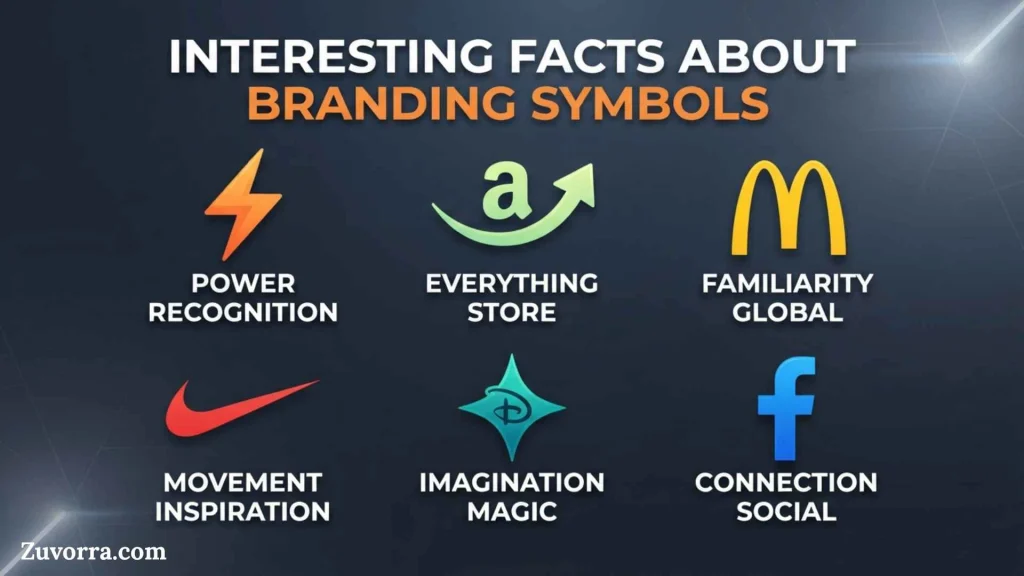
- Some of the oldest identity marks were made by craftspeople. They connected an object to a workshop or maker long before modern advertising existed.
- A logo can be protected in more than one way. Its artwork may qualify for copyright protection, while its source-identifying function may fall under trademark law.
- A symbol does not have to be visual in every country. Some legal systems recognize distinctive sounds and other nontraditional marks.
- Small-screen design has changed logo structure. Brands increasingly create reduced versions that remain legible as app icons and profile images.
- Negative space can carry meaning. Designers sometimes use the unprinted area between shapes to form a second image or visual clue.
- A universal symbol may be difficult to claim exclusively. Common informational icons often fail to identify one commercial source because everyone uses them.
- Trademark registration is territorial. Protection obtained in one country does not automatically create equivalent rights everywhere else.
- Familiarity can survive major simplification. Once recognition is strong, a brand may remove words or details while preserving its most distinctive shape.
- Sound can function like a visual logo. A brief sequence of notes may identify a platform, broadcaster, studio, or device before any image appears.
- Public meaning can overpower intended meaning. A company may explain a logo one way, but audience experience and cultural context ultimately shape how it is understood.
Related Symbols and Concepts
| Related concept | How it differs |
| Trademark | A legal source identifier that may include a name, image, sound, shape, or other distinctive sign |
| Logo | A designed visual mark representing an organization or product |
| Wordmark | A logo built primarily from the written brand name |
| Monogram | A symbol formed from two or more letters |
| Emblem | A contained badge, crest, or seal combining words and imagery |
| Icon | A small graphic representing an object, action, feature, or brand |
| Seal | A mark associated with authority, authentication, approval, or office |
| Certification mark | A mark indicating that goods or services meet defined standards or conditions |
| Trade dress | The recognizable overall appearance of a product or its packaging |
| Pictogram | A simplified image used to communicate an object, instruction, or idea |
Frequently Asked Questions
What are branding symbols?
Branding symbols are recognizable signs that represent a company, organization, product, or service. They include logos, names, initials, icons, colors, mascots, emblems, packaging shapes, patterns, sounds, and motion. Their central purpose is to help audiences identify a source and connect it with particular experiences or qualities.
What is the difference between a brand symbol and a logo?
A logo is a designed visual identifier, while a brand symbol is a broader category. Brand symbols can include logos, colors, sounds, characters, patterns, packaging, and even distinctive movements. In everyday speech, people often use “logo” and “brand symbol” interchangeably, but the second term covers more possibilities.
What makes a branding symbol effective?
An effective symbol is distinctive, relevant, recognizable, scalable, and suitable for its audience. It should remain clear in different sizes and formats. It must also avoid confusing similarity with existing marks. Most importantly, the organization’s behavior and customer experience must support the qualities that the symbol promises.
Can a color be a trademark?
In some jurisdictions, a specific color or color arrangement can receive trademark protection when it identifies a commercial source rather than merely decorating or describing a product. Protection depends on distinctiveness, use, market context, and local law. Registering a color mark is generally more difficult than registering a distinctive name or logo.
Can I use the ™ symbol without registration?
In the United States, a person or business may use ™ to indicate a trademark claim even without federal registration. The symbol does not guarantee ownership or approval. It also does not replace a clearance search. Rules and legal effects vary internationally, so local guidance may be necessary.
When can a company use the ® symbol?
In the United States, ® should be used only after the mark has been federally registered with the USPTO. It should appear only with the goods or services covered by that registration. Using it before registration can misrepresent the mark’s status and may create legal problems.
Why do companies simplify their logos?
Companies simplify logos to improve clarity across mobile screens, social platforms, packaging, signs, and digital interfaces. Fewer details can make a mark easier to reproduce and recognize. Simplification succeeds when the revised design retains the features that audiences already connect with the brand.
Do shapes have universal branding meanings?
No shape has one universal meaning. Circles often suggest unity, squares may imply stability, and triangles can suggest movement or hierarchy, but these are tendencies rather than fixed rules. Meaning changes with color, orientation, culture, industry, typography, and the viewer’s prior experience.
How can a company avoid offensive symbolism?
A company should research the symbol’s historical, religious, political, and regional associations. It should test the design with people from relevant communities and markets. Consultation becomes especially important when using Indigenous motifs, sacred imagery, national emblems, scripts from unfamiliar languages, or symbols connected with conflict and oppression.
Should a small business register its branding symbol?
Registration may provide valuable rights, but the decision depends on location, budget, expansion plans, distinctiveness, and commercial risk. Before filing, a business should search existing marks and determine which goods or services the symbol identifies. A qualified trademark professional can provide advice for the relevant jurisdiction.
Key Takeaways
- Branding symbols identify and distinguish companies, products, services, and organizations.
- They include logos, names, initials, icons, mascots, colors, shapes, sounds, patterns, and packaging.
- Their history reaches back to maker’s marks, seals, heraldry, and shop signs.
- Symbolic meanings change across cultures, industries, and historical contexts.
- A logo is part of a brand, not the entire brand.
- ™, SM, ®, and © do not mean the same thing.
- Strong symbols are distinctive, clear, scalable, culturally appropriate, and consistently used.
- Recognition grows through repeated exposure, but trust depends on real behavior and experience.
- Trademark protection is territorial and varies by jurisdiction.
- Cultural and legal research should happen before a symbol is launched.
Conclusion
Branding symbols turn complex identities into forms people can recognize within seconds. A name, shape, color, emblem, character, or sound can identify a source while suggesting values such as trust, energy, heritage, creativity, or quality.
Their power does not come from appearance alone. Meaning develops through history, culture, repetition, customer experience, and public reputation. The most successful branding symbols remain visually clear while adapting to packaging, buildings, social media, mobile apps, and international markets.
Understanding their origins, variations, cultural associations, and legal roles makes it easier to read existing identities and create new ones responsibly. A well-designed symbol may open the door to recognition, but the brand’s actions determine what that symbol eventually means.
References
- World Intellectual Property Organization. “Trademarks” and “How to Protect a Trademark.” WIPO explains the definition, distinctiveness, registration, and possible forms of trademarks.
- United States Patent and Trademark Office. “What Is a Trademark?” and “Why Register Your Trademark?” USPTO guidance explains trademarks and the use of ™, SM, and ® in the United States.
- United States Patent and Trademark Office. Trademark Manual of Examining Procedure, guidance on trademark notices and registration symbols.
- Design Museum. “London Transport.” Historical information about the London Underground roundel and coordinated transport identity.
