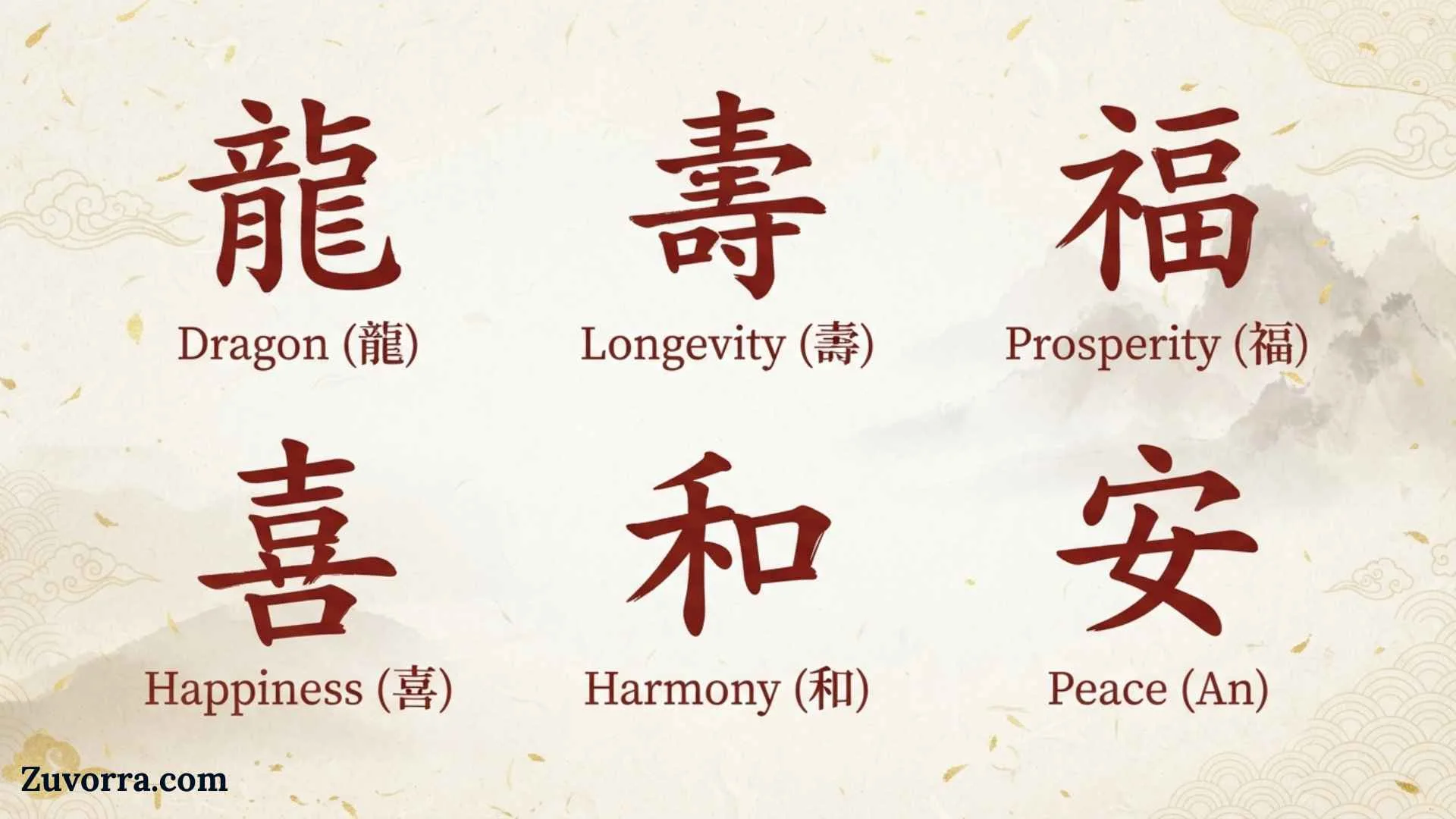
Cool Chinese symbols attract attention because they combine visual beauty with layers of language, history, philosophy, and cultural tradition. You may see them in Chinese calligraphy, New Year decorations, wedding banners, jewelry, clothing, logos, martial arts schools, artwork, or tattoos.
Most designs called “Chinese symbols” are actually Chinese characters, known as Hanzi. Each character represents a spoken syllable and usually carries meaning, but its exact interpretation can change according to context. Popular examples include 福 for blessing, 爱 for love, 勇 for courage, 和 for harmony, and 龙 for dragon.
Quick Meaning
Cool Chinese symbols are meaningful Chinese characters or traditional designs chosen for their appearance and symbolism. They commonly represent love, strength, courage, harmony, luck, wisdom, family, prosperity, and long life. Their meanings depend on language, cultural context, calligraphic style, and whether simplified or traditional Chinese forms are used.
Cool Chinese Symbols Overview Table
| Symbol | Pinyin | Primary Meaning | Category | Common Usage | Unicode |
| 福 | fú | Blessing, good fortune | Auspicious character | New Year decorations, homes, gifts | U+798F |
| 爱 / 愛 | ài | Love | Emotion | Jewelry, art, tattoos, messages | U+7231 / U+611B |
| 力 | lì | Strength, power | Personal quality | Fitness logos, martial arts, tattoos | U+529B |
| 勇 | yǒng | Courage, bravery | Virtue | Martial arts, motivational art | U+52C7 |
| 和 | hé | Harmony, peace | Social value | Calligraphy, branding, philosophy | U+548C |
| 智 | zhì | Wisdom, intelligence | Virtue | Education, names, calligraphy | U+667A |
| 龙 / 龍 | lóng | Dragon | Mythical creature | Festivals, art, zodiac imagery | U+9F99 / U+9F8D |
| 寿 / 壽 | shòu | Longevity | Auspicious character | Birthdays, ceramics, gifts | U+5BFF / U+58FD |
| 安 | ān | Peace, safety | Positive state | Names, signs, decorative art | U+5B89 |
| 家 | jiā | Home, family | Relationship and place | Family art, names, décor | U+5BB6 |
| 梦 / 夢 | mèng | Dream | Idea or experience | Poetry, art, inspirational designs | U+68A6 / U+5922 |
| 道 | dào | Way, path, principle | Philosophy | Daoism, martial arts, literature | U+9053 |
| 忍 | rěn | Endure, tolerate | Personal discipline | Martial arts, calligraphy, tattoos | U+5FCD |
| 吉 | jí | Auspicious, fortunate | Good luck | Celebrations, business names, décor | U+5409 |
| 囍 | xǐ | Double happiness | Wedding symbol | Marriage decorations and gifts | U+56CD |
| 禅 / 禪 | chán | Meditation; Chan Buddhism | Spiritual term | Temples, meditation art, décor | U+7985 / U+79AA |
| ☯ | yīn-yáng | Complementary forces | Philosophical symbol | Daoist imagery, wellness, art | U+262F |
What Do Cool Chinese Symbols Mean?
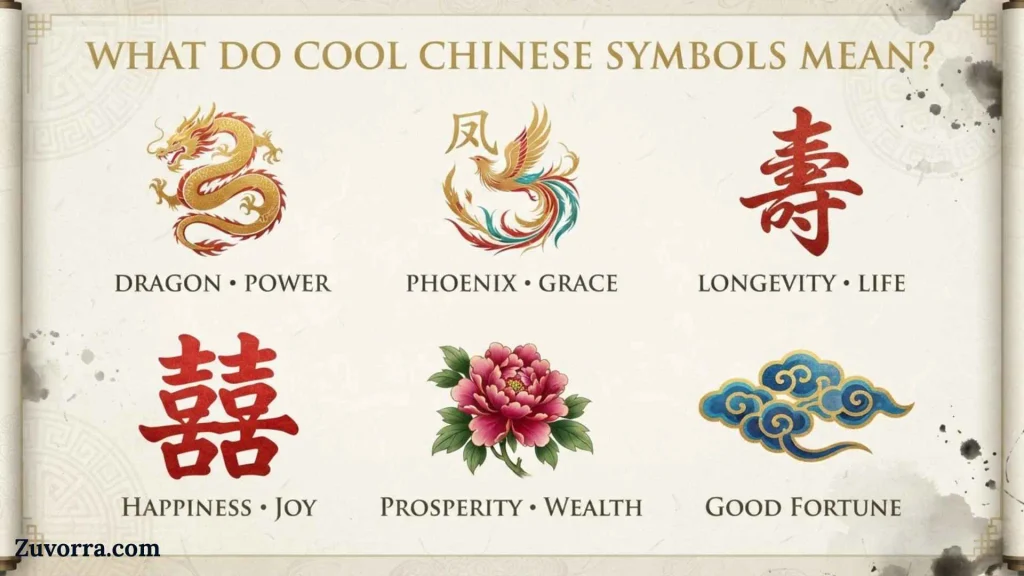
Cool Chinese symbols communicate ideas through written forms, artistic composition, and cultural association. Unlike alphabetic letters, Chinese characters generally carry both sound and meaning. A single character can function as a word, part of a compound word, a name element, or a decorative emblem.
For example, 福 means blessing, happiness, or good fortune. When displayed during Lunar New Year, it does more than label an abstract idea. It expresses a wish that fortune will enter the home.
Other characters communicate personal virtues:
- 勇 represents courage.
- 智 represents wisdom.
- 忍 concerns endurance or restraint.
- 和 suggests harmony.
- 安 expresses peace, safety, or calm.
Their appeal comes partly from this ability to compress a large concept into a small visual form. However, a character should not be treated as a universal pictogram. Its meaning depends on how Chinese speakers use it in words and sentences.
A tattoo containing 力, for instance, can reasonably communicate “strength.” Yet Chinese readers may see it first as an ordinary written word rather than a mysterious spiritual emblem. Accurate translation and cultural context matter as much as appearance.
Popular Cool Chinese Symbols and Their Deeper Meanings
福: Blessing and Good Fortune
福, pronounced fú, means blessing, good fortune, or happiness created by favorable circumstances. It is one of the most recognizable auspicious Chinese characters.
During Lunar New Year, families commonly display it on doors, walls, lanterns, and red paper decorations. A famous custom places the character upside down. This creates a visual pun because “fortune is upside down” and “fortune has arrived” sound similar in Mandarin.
The character therefore represents more than sudden luck. It can suggest a fortunate life that includes security, health, family unity, and material well-being.
爱 or 愛: Love
爱 is the simplified Chinese form of “love,” while 愛 is the traditional form. Both are pronounced ài in Mandarin.
The character can refer to romantic love, family affection, deep fondness, or the act of loving something. In real Chinese, it appears in phrases such as:
- 爱情: romantic love
- 爱人: spouse or romantic partner
- 母爱: maternal love
- 热爱: to love deeply or feel passionate about
The traditional form 愛 is often chosen for art because of its complex structure. Claims that its components provide a complete ancient definition of love should be treated cautiously. Modern character decomposition does not always reveal a word’s true historical development.
力: Strength and Power
力, pronounced lì, means strength, force, power, or physical effort. Its direct shape and simple strokes make it popular in martial arts designs and motivational artwork.
It also appears in many practical words:
- 力量: strength or power
- 能力: ability
- 努力: to make an effort
- 体力: physical strength
As a personal symbol, it can represent resilience and determination. Linguistically, however, it describes force or capacity more directly than spiritual strength.
勇: Courage and Bravery
勇, pronounced yǒng, means brave, courageous, or bold. It is associated with facing danger or difficulty despite fear.
In traditional moral thought, courage is most admirable when guided by judgment and responsibility. Recklessness is not automatically bravery. For that reason, 勇 can symbolize disciplined courage rather than aggression.
The common word 勇气 means courage, while 勇敢 means brave or courageous.
和: Harmony and Peaceful Balance
和, usually pronounced hé in this meaning, can mean harmony, peace, gentle relations, or agreement. It also serves several grammatical and lexical functions, so its translation depends heavily on context.
As a cultural value, harmony does not simply mean avoiding disagreement. It often suggests creating balance among people, responsibilities, and competing interests.
The phrase 和而不同, traditionally associated with Confucian thought, expresses the idea that people may live harmoniously without becoming identical. This makes 和 a strong symbol of cooperation, balance, and respectful difference.
智: Wisdom
智, pronounced zhì, means wisdom, intelligence, or sound judgment. It implies more than collecting information. It can suggest the ability to understand circumstances and act wisely.
Common compounds include:
- 智慧: wisdom
- 智力: intellectual ability
- 明智: wise or sensible
- 理智: reason or rational judgment
The character works well in educational art or personal designs, but it should not be confused with 知, which commonly means to know or knowledge.
龙 or 龍: The Chinese Dragon
龙 is the simplified form and 龍 the traditional form of lóng, the Chinese dragon.
In Chinese culture, the dragon has traditionally been associated with power, rain, water, vitality, imperial authority, and favorable natural forces. This differs from many European legends, where dragons are often fire-breathing monsters that heroes must defeat.
Chinese dragons frequently appear with long, serpentine bodies, horns, claws, scales, and no wings. They are connected with rivers, clouds, rainfall, and seasonal renewal.
The dragon is also one of the twelve animals of the Chinese zodiac. People may choose it as a symbol of ambition, confidence, leadership, and energetic power.
寿 or 壽: Longevity
寿 and 壽, pronounced shòu, mean longevity or long life. The character appears on birthday gifts, textiles, furniture, porcelain, paintings, cakes, and architectural decorations.
A highly stylized longevity character may be arranged in a circular or symmetrical form. Some designs are so decorative that people unfamiliar with the tradition may not recognize them as writing.
The symbol usually expresses a wish for a long, healthy, and respected life. It is especially suitable for celebrations honoring older family members.
安: Peace and Safety
安, pronounced ān, means peaceful, safe, secure, or calm. It appears in ordinary words and names as well as symbolic art.
Examples include:
- 安全: safety
- 平安: peace and safety
- 安心: to feel reassured
- 安静: quiet
As a decorative symbol, 安 expresses stability rather than political peace alone. It may represent a safe journey, a calm home, emotional reassurance, or freedom from danger.
家: Home and Family
家, pronounced jiā, means home, household, or family. It can also form words referring to specialists, professionals, or schools of thought.
In symbolic use, it represents belonging, family connection, ancestry, and domestic security. It is popular in wall art and family-themed decorations because it communicates both a physical home and the people who make that place meaningful.
The character should not be translated only as “family.” In different phrases, it can mean home, household, or a person associated with a field, as in 艺术家, meaning artist.
梦 or 夢: Dream
梦 is simplified Chinese, while 夢 is traditional Chinese. Both are pronounced mèng and mean dream.
The word can describe a dream during sleep or a figurative hope and aspiration. For that reason, it appears in poetry, song titles, personal art, and motivational designs.
The phrase 梦想 usually means dream, ideal, or aspiration. A person choosing this character should decide whether the intended message is imagination, ambition, mystery, or an actual sleeping dream.
道: The Way or Path
道, pronounced dào, means way, road, path, method, principle, or teaching, depending on context. In Daoist philosophy, it refers to the Way underlying natural processes and possible ways of living in accordance with them.
The character is also an ordinary Chinese word. It appears in terms for roads, moral principles, methods, doctrines, and verbal expression.
Using 道 as a symbol can suggest a life path, a disciplined practice, natural order, or philosophical inquiry. It should not automatically be translated as “religion” or “destiny.”
忍: Endurance and Restraint
忍, pronounced rěn, means to endure, tolerate, bear, or restrain oneself. It is commonly interpreted as patience, but “patience” alone does not capture its full meaning.
The character may describe tolerating hardship, controlling an emotional reaction, or enduring something painful. In a positive setting, it symbolizes discipline and perseverance. In a negative setting, it may imply silently accepting conditions that should be challenged.
Its meaning therefore depends on what is being endured and why.
吉: Auspiciousness
吉, pronounced jí, means lucky, favorable, or auspicious. It is widely used in greetings, names, ceremonial expressions, and business language.
The phrase 吉祥 means auspicious or propitious. Unlike casual luck, 吉 often refers to signs or circumstances considered favorable for an event, journey, marriage, opening, or new beginning.
Its balanced shape also makes it visually effective in stamps, logos, and decorative patterns.
囍: Double Happiness
囍, pronounced xǐ, is known as the double-happiness symbol. It visually combines two forms of 喜, the character for happiness or joy.
The design is strongly linked with Chinese weddings. It appears on invitations, red envelopes, lanterns, bedroom decorations, tea sets, gift boxes, and ceremonial backdrops.
Double happiness does not normally mean “twice as happy” in everyday grammar. It is a specialized wedding emblem representing shared marital joy and an auspicious union.
禅 or 禪: Meditation and Chan Buddhism
禅 is the simplified form and 禪 the traditional form of chán. In Chinese religious history, Chan refers to the Buddhist tradition better known internationally through the Japanese pronunciation “Zen.”
The character is frequently marketed as meaning “meditation,” but its use is more specific than a general command to relax. Depending on context, it may refer to meditation, Buddhist contemplation, or the Chan tradition.
Choosing it for décor or a tattoo should reflect that religious and historical background.
History and Origin of Chinese Characters
Chinese writing developed more than three thousand years ago. Some of the earliest surviving examples appear on oracle bones used during the late Shang period. These inscriptions recorded questions and divination concerning warfare, harvests, weather, childbirth, hunting, and royal affairs.
Chinese script did not remain visually fixed. Different writing styles evolved in response to government administration, writing materials, artistic practice, and the need for greater speed or clarity. Major historical forms include seal, clerical, cursive, running, and standard scripts. The Metropolitan Museum of Art identifies seal script as an early historical form and describes later clerical, standard, running, and cursive developments.
Chinese calligraphy emerged as much more than attractive handwriting. The movement, pressure, rhythm, spacing, and structure of brushstrokes became forms of artistic expression. Standard character structures still guide the writer, but every handwritten work can reveal individual energy and control.
Modern written Chinese commonly uses either simplified or traditional characters. Simplified forms are standard in mainland China and Singapore, while traditional forms remain widely used in Taiwan, Hong Kong, and Macau. Regional practice, personal preference, publication context, and artistic purpose all influence which form appears.
Symbolism and Interpretation
Chinese character symbolism operates on several levels.
First, a character has a linguistic meaning. 福 is a real word associated with blessings and good fortune.
Second, it may have a cultural use. Displaying 福 during Lunar New Year gives it a seasonal and ceremonial role.
Third, it has an artistic form. Seal script may make the same character feel ancient and formal, while cursive calligraphy can make it feel energetic or spontaneous.
Fourth, color and placement add meaning. Red is strongly associated with celebration, joy, and auspicious occasions in Chinese cultural settings. A red wedding decoration featuring 囍 therefore gains meaning from both the character and its color.
Symbolism can also be negative or ambiguous. 忍 may praise resilience, but it can suggest suppressing feelings. 力 can represent healthy strength or coercive power. 龙 may signal dignity in one context and become a generic fantasy image in another.
A responsible interpretation asks four questions:
- What does the character mean in Chinese?
- How is it used in actual words or traditions?
- Which script and regional form does it use?
- What message does the full design communicate?
Cultural Significance
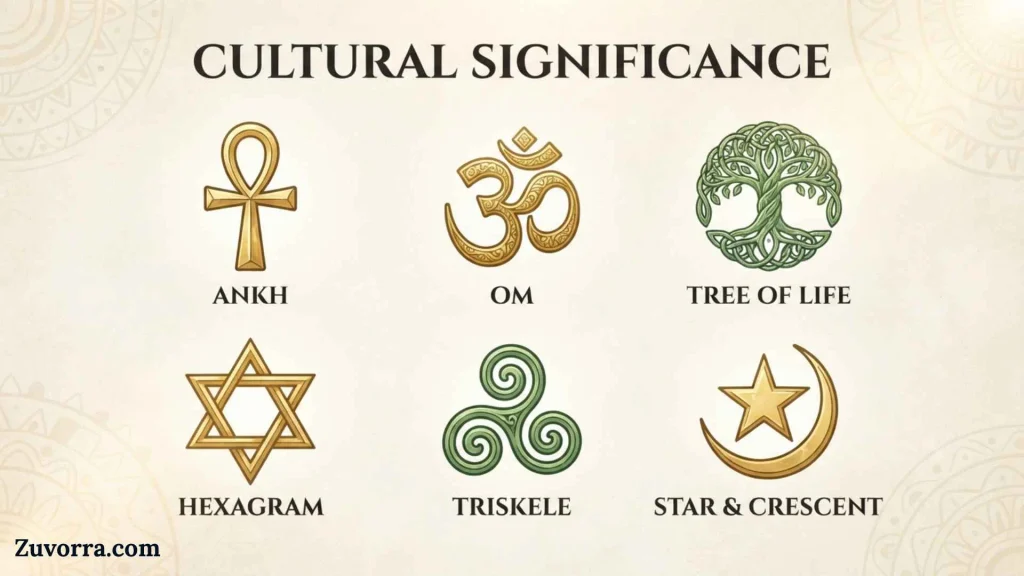
Chinese characters have influenced writing and visual culture across East Asia. Han characters became part of Japanese writing as kanji and historically influenced Korean and Vietnamese systems. Unicode therefore groups many shared forms under the technical category of CJK unified ideographs.
Shared historical origin does not guarantee identical modern meaning. A character may exist in Chinese and Japanese but have different pronunciations, preferred forms, associations, or everyday uses. A design advertised as a “Chinese symbol” may actually use a Japanese font or a Japanese-specific expression.
Within Chinese-speaking communities, regional variation also matters. Traditional and simplified forms may carry the same basic lexical meaning, yet their visual and cultural associations differ. Traditional characters often appear in heritage art, religious settings, calligraphy, and designs intended to evoke historical continuity.
Personal names create another layer. Characters such as 安, 智, 勇, and 美 can appear in names, but combining attractive characters does not automatically create a natural Chinese name. Naming conventions depend on pronunciation, family names, generation patterns, and cultural expectations.
Religious and Spiritual Meaning
Some popular Chinese symbols have religious connections, while others are simply everyday words that gained decorative appeal.
Dao and Daoism
道 is central to Daoist thought, but it is not a simple logo for Daoism. It means way or path and carries philosophical, ethical, practical, and linguistic senses. Daoist texts explore how human life relates to natural patterns, spontaneity, action, and social conventions.
Yin and Yang
The yin-yang design, ☯, represents complementary and interdependent forces. Yin and yang are not equal to evil and good. They describe relational qualities such as shade and sunlight, inward and outward movement, rest and activity, or coolness and warmth.
Each side contains a point of the other, suggesting that conditions transform and that opposites are not completely separate. The symbol is closely associated with Chinese cosmology and Daoist thought, though its concepts have also influenced medicine, martial arts, philosophy, and popular culture.
Chan Buddhism
禅 / 禪 relates to meditative Buddhist practice and the Chan tradition. It should not be used as a vague symbol for any peaceful feeling without recognizing its Buddhist context.
Ancestors and Auspicious Symbols
Characters such as 福, 寿, and 吉 may appear in family rituals, temple environments, memorial settings, and festivals. Their presence does not necessarily make them sacred objects. Often, they express culturally rooted wishes for blessing, longevity, harmony, and favorable outcomes.
Scientific, Technical, and Digital Meaning
Chinese characters are encoded digitally rather than stored as pictures. Unicode assigns code points that allow compatible computers, websites, and mobile devices to display and exchange text.
The Unicode Standard includes extensive blocks of CJK Unified Ideographs, and the Unihan database stores mappings and information related to characters used across Chinese, Japanese, Korean, and historical Vietnamese writing.
A Unicode number identifies an encoded character, not its exact visual appearance. Fonts may display the same code point with regional differences in stroke shape. This is why a Chinese character can look slightly different on two devices while remaining the same encoded character.
Chinese characters are not emojis. An emoji is generally a pictographic symbol with standardized presentation behavior, while a character such as 福 is part of a writing system. The yin-yang sign ☯, however, belongs to a Unicode symbols block and may receive text-style or emoji-style presentation on some platforms.
Where Chinese Symbols Are Used
Chinese characters and traditional symbols appear in many settings:
- Calligraphy: Scrolls, albums, fans, couplets, and framed artwork
- Festivals: Red banners, lanterns, paper cuttings, and New Year decorations
- Weddings: Double happiness signs, invitations, gifts, and ceremonial objects
- Architecture: Gates, temples, ancestral halls, plaques, and stone inscriptions
- Jewelry: Pendants, rings, bracelets, beads, and engraved charms
- Tattoos: Personal values, names, dates, philosophical terms, and memorials
- Martial arts: School names, uniforms, weapons, logos, and training spaces
- Literature: Poetry, novels, idioms, titles, and classical texts
- Branding: Restaurants, tea products, wellness brands, and cultural organizations
- Technology: User interfaces, fonts, input systems, domain names, and social media
- Ceramics and textiles: Longevity designs, blessings, floral patterns, and wedding motifs
- Seals: Personal names, studio names, ownership marks, and artistic signatures
Chinese calligraphy is especially important because it joins writing and visual art. Its major scripts can make one character appear formal, ancient, controlled, lively, or dramatically abstract.
Common Variations
Simplified and Traditional Forms
Some characters have two widely recognized forms:
| Simplified | Traditional | Meaning |
| 爱 | 愛 | Love |
| 龙 | 龍 | Dragon |
| 寿 | 壽 | Longevity |
| 梦 | 夢 | Dream |
| 禅 | 禪 | Chan or meditation |
| 国 | 國 | Country or nation |
| 乐 | 樂 | Joy, music, or pleasure, depending on pronunciation |
Neither writing system is automatically more “authentic.” The appropriate choice depends on region, audience, historical setting, and artistic goal.
Calligraphic Styles
The same character may appear in:
- Seal script
- Clerical script
- Standard script
- Running script
- Cursive script
Cursive characters can differ sharply from printed dictionary forms. Decorative versions should therefore be checked by someone who can read the specific script.
Circular and Symmetrical Designs
Characters such as 寿 may be stretched, repeated, mirrored, or placed inside round medallions. 囍 already has a balanced, paired design suited to wedding decorations.
Character Compounds
A single character may not express the complete intended idea. For example:
- 和平 means peace.
- 幸福 means happiness or well-being.
- 自由 means freedom.
- 力量 means strength or power.
- 智慧 means wisdom.
- 勇气 means courage.
Two-character words often sound more natural than isolated characters.
Common Misconceptions
Every Chinese character is a picture
Some early forms had pictographic qualities, but modern Chinese writing is not a collection of simple pictures. Many characters combine components that suggest meaning, sound, or both.
One character always has one meaning
A character can have several meanings and pronunciations. 和, for example, may relate to harmony, joining, or grammatical functions depending on the expression.
Yin and yang mean good and evil
Yin and yang describe complementary, changing relationships. Treating one as good and the other as evil misrepresents the concept.
Traditional characters are always better for tattoos
Traditional forms may look more complex, but visual complexity does not guarantee accuracy. The best form depends on the intended audience and meaning.
Online translation is enough for permanent artwork
Automatic tools may provide a correct dictionary word but miss tone, context, idiom, regional preference, or unintended associations.
Any attractive combination makes a meaningful phrase
Placing “strength,” “love,” and “dragon” together may produce a sequence that looks impressive to a nonreader but feels random to a Chinese speaker.
How to Choose the Right Chinese Symbol
Use this simple decision guide before choosing art, jewelry, branding, or a tattoo:
Do you want one broad quality?
↓
Choose a verified single character such as 勇, 安, or 爱.
Do you want a precise message?
↓
Use a natural two-character or four-character expression.
Is the design for a wedding?
↓
Consider 囍, but do not use it as a general symbol of individual happiness.
Do you want a philosophical symbol?
↓
Research 道, yin-yang, or a complete quotation instead of relying on a decorative translation.
Will the design be permanent or commercial?
↓
Have a fluent reader review the characters, grammar, script, orientation, and font.
Interesting Facts About Chinese Symbols
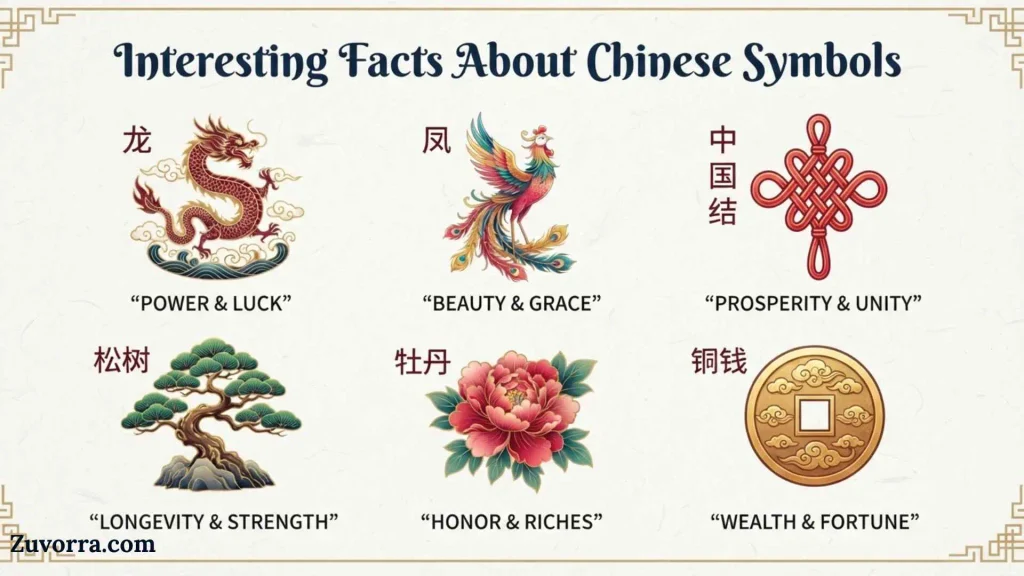
- Chinese calligraphy is both writing and fine art.
Stroke order, brush pressure, rhythm, spacing, and movement can express the calligrapher’s personality while preserving a recognizable character structure. - The oldest surviving Chinese inscriptions were not written on paper.
Early records appear on materials such as animal bones, turtle shells, bronze vessels, bamboo, stone, and silk. - A character can remain the same code point while changing appearance.
Different fonts and regional conventions may alter stroke shapes without changing the encoded Unicode character. - Cursive writing may omit or connect strokes.
This makes historical calligraphy expressive but difficult for beginners to identify. Some cursive forms look almost abstract. - The Chinese dragon is strongly linked with water.
Unlike many Western dragons, it is traditionally connected with rainfall, rivers, clouds, agriculture, and natural vitality. - Double happiness is mainly a wedding emblem.
Although it contains two happiness characters, its established cultural role concerns marriage rather than ordinary happiness. - Upside-down fortune uses wordplay.
Turning 福 upside down can evoke the phrase “fortune has arrived” because of a Mandarin sound association. - One concept may have both a single-character and compound form.
智 suggests wisdom, while 智慧 is the common full word. The compound may communicate more naturally in a sentence or tattoo. - Stroke order has practical value.
It supports balanced writing, dictionary lookup, handwriting recognition, and the efficient production of complex forms. - Characters crossed language boundaries.
Chinese characters influenced several East Asian writing traditions, but pronunciation and meaning developed differently in each language. - Red strengthens auspicious designs.
A red 福, 寿, or 囍 carries associations created jointly by the character, color, occasion, and placement. - Beautiful calligraphy may be unreadable to beginners.
Decorative art can transform familiar characters so strongly that identifying them requires knowledge of historical scripts.
Related Chinese Symbols
喜: Happiness or Joy
喜, pronounced xǐ, means happiness, joy, or delight. Unlike 囍, it is not limited to weddings and can appear in ordinary vocabulary.
富: Wealth
富, pronounced fù, means rich, wealthy, or abundant. It focuses more directly on material wealth than 福, which has a broader sense of blessing and good fortune.
康: Health and Well-Being
康, pronounced kāng, can mean healthy, peaceful, or well. It commonly appears in 健康, the standard word for health.
美: Beauty
美, pronounced měi, means beautiful or beauty. It can refer to physical attractiveness, artistic quality, or something admirable.
心: Heart or Mind
心, pronounced xīn, means heart and can also relate to mind, intention, or emotion. It appears as a full character and as a component within many other characters.
火: Fire
火, pronounced huǒ, means fire. It can symbolize heat, energy, transformation, danger, or passion, but these symbolic meanings vary by context.
水: Water
水, pronounced shuǐ, means water. In art and philosophy, water can suggest adaptability, nourishment, calmness, persistence, or natural movement.
山: Mountain
山, pronounced shān, means mountain. It may represent stability, endurance, nature, retreat, or spiritual elevation, although these are interpretive associations rather than fixed dictionary meanings.
Frequently Asked Questions
What are the coolest Chinese symbols?
Popular choices include 福 for blessing, 爱 for love, 勇 for courage, 力 for strength, 和 for harmony, 龙 for dragon, 寿 for longevity, and 道 for the Way. The best symbol is one whose real linguistic and cultural meaning matches your purpose.
What Chinese symbol means strength?
力 directly means strength, force, or power. 力量 is the fuller everyday word for strength or power, while 坚强 describes being strong or resilient in character. For tattoos or artwork, choose according to whether you mean physical power, emotional resilience, ability, or determination.
What Chinese symbol means love?
爱 is the simplified Chinese character for love, and 愛 is its traditional form. It can express romantic love, family affection, or deep fondness. A complete phrase may communicate a more specific message, such as 爱情 for romantic love or 母爱 for maternal love.
What Chinese symbol means good luck?
福 represents blessing and good fortune, while 吉 means auspicious or favorable. 好运 is a common expression meaning good luck. The ideal choice depends on whether you want a traditional blessing, a favorable omen, or an everyday wish for luck.
What Chinese symbol represents peace?
安 represents peace, safety, and calm, while 和平 is the standard compound for peace, especially between people or nations. 和 emphasizes harmony. A peaceful-home design may use 平安, which conveys peace, safety, and well-being.
Is the yin-yang sign a Chinese character?
No. ☯ is a traditional diagram rather than a Chinese character used to write a spoken word. It represents the relationship between yin and yang. The concepts themselves are written with the characters 阴阳 in simplified Chinese or 陰陽 in traditional Chinese.
Should I use simplified or traditional Chinese characters?
Use the form that fits your audience and context. Simplified characters are standard in mainland China and Singapore. Traditional characters are widely used in Taiwan, Hong Kong, and Macau and often appear in heritage calligraphy. For permanent designs, confirm the choice with a fluent reader.
Are Chinese symbol tattoos disrespectful?
They are not automatically disrespectful, but careless use can appear uninformed. Avoid sacred material used only for decoration, verify every translation, preserve the correct orientation, and consult a fluent reader. Respect begins with understanding the language and cultural background rather than choosing a character only for its shape.
Can one Chinese character express a complete idea?
Yes, some characters function as full words, but isolated characters may sound broad, literary, or incomplete. Compounds often communicate more naturally. 勇 means courage or brave, for example, but 勇气 is the ordinary noun “courage.” Context determines which form works best.
How can I verify a Chinese symbol before using it?
Check the character in reliable dictionaries, confirm whether it is simplified or traditional, examine its use in complete phrases, and ask at least one fluent Chinese reader. For tattoos, logos, or legal products, review the final calligraphy rather than approving only typed text.
Key Takeaways
- Most cool Chinese symbols are Chinese characters called Hanzi.
- 福, 爱, 勇, 和, 龙, and 寿 are among the most popular.
- A character’s meaning depends on linguistic and cultural context.
- Simplified and traditional forms can look very different.
- Chinese characters are words or word elements, not generic pictograms.
- Calligraphic style changes appearance but should preserve readable structure.
- Yin and yang represent complementary forces, not good versus evil.
- Single characters work for broad ideas; compounds provide greater precision.
- Tattoos and commercial designs should always be reviewed by a fluent reader.
- Cultural respect requires understanding how a symbol is actually used.
Conclusion
Cool Chinese symbols are compelling because they bring language, visual art, history, and cultural meaning together. A single character such as 福, 爱, 勇, or 安 can communicate a powerful idea, but its meaning becomes richer when you understand its pronunciation, context, script style, and traditional use.
Choose symbols for more than their appearance. Confirm the wording, distinguish simplified from traditional forms, and consider how Chinese readers will understand the design. When selected thoughtfully, cool Chinese symbols can express love, courage, harmony, wisdom, family, good fortune, and personal purpose with clarity and lasting significance.
References
- The Metropolitan Museum of Art. “Chinese Calligraphy.” Overview of Chinese characters, literacy, and calligraphic traditions.
- The Metropolitan Museum of Art. “Out of Character: Decoding Chinese Calligraphy.” History and development of Chinese script styles.
- The Metropolitan Museum of Art. “The Embodied Image: Chinese Calligraphy.” Historical outline of major script types.
- Unicode Consortium. “CJK Unified Ideographs.” Official Unicode code charts.
- Unicode Consortium. “Unicode Han Database.” Technical information about Han ideographs and language mappings.
- Unicode Consortium. “Chinese and Japanese FAQ.” Guidance on CJK character encoding and normalization.
- Stanford Encyclopedia of Philosophy. “Daoism.” Scholarly discussion of dào and Chinese Daoist philosophy.
I’m Felix Everard, a British writer passionate about the fascinating world of symbols and visual communication. I explore traditional, cultural, historical, and modern symbols, focusing on what they represent and why they matter. Through accessible explanations, I hope to help readers recognise the meanings hidden within familiar signs, shapes, and images.
Books:
- The Complete Guide to Symbolism
- Decoding Signs and Symbols